Can mHealth deliver greater health equity?
Sep. 2018mHealth
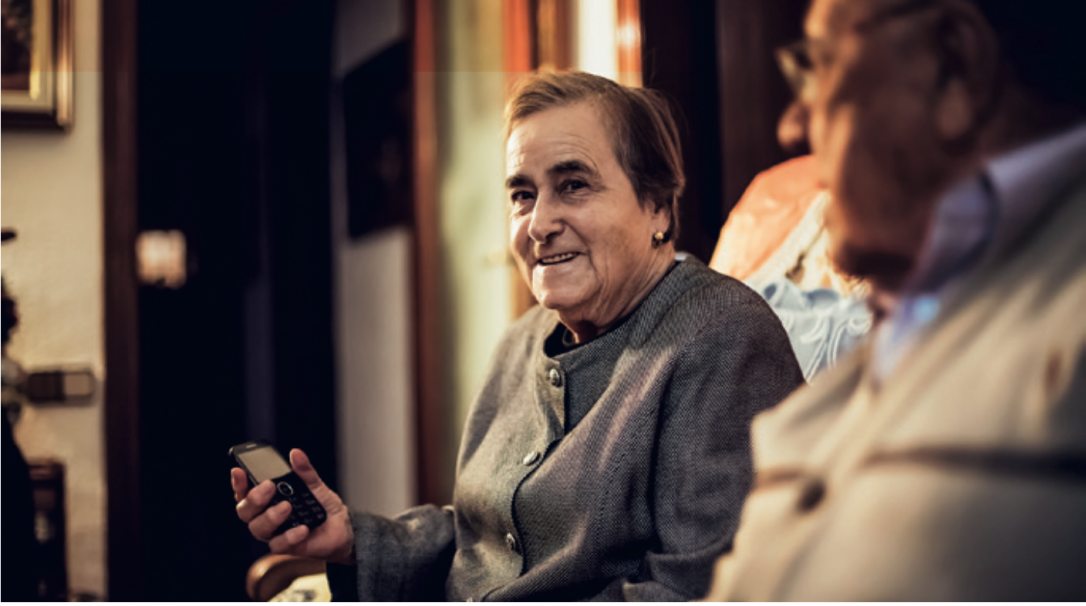
Digital disadvantage. The widespread adoption of smartphones in all sectors of the population gives some idea of the potential that could be harnessed for health promotion and prevention purposes. However, owning a smartphone does not always equate with being able to make adequate use of mHealth apps.
Who's going to benefit from it? This is the question that gets asked
with every new achievement. One concept that is frequently mentioned
when talking about digital media in this context is the "digital
divide". This term is applied to the gap that exists between the people
who are able to use new digital services to expand their knowledge and
those who cannot benefit from such progress. Furthermore, mHealth can
only benefit people who own the necessary technical equipment, possess
the skills needed to use it effectively and have the motivation to adopt it or at least see advantages in adopting it.
Switzerland's Media Use Index for 2017 shows that 92 per cent of the population
accesses the Internet from a mobile device. Nevertheless, it must be
assumed that there are groups within the population who find using
digital media or the content available on them challenging. This group,
known as the "digitally disadvantaged", consists primarily of older
people and people with a low socio-economic status or level of
education.
mHealth skills – i.e. the ability to use mHealth apps effectively – include the following:
– The reading, writing and arithmetic skills needed to use written information.
– Technical skills to ensure access to functioning technical equipment
and the Internet, and the ability to use apps, websites or other
applications.
– Health skills, i.e. being able to take decisions in everyday life that have a positive impact on health.
– Being able to understand diagrams or
illustrations containing information.
The skills needed to use mHealth apps can change over time and in certain life situations.
Another important consideration is the fact that the skills needed to use
mHealth apps can change over time and in certain life situations. The
health skills of people with physical or mental problems are frequently
impaired in particular situations.
Access
to mHealth can be facilitated by improving mHealth skills while at the
same time ensuring that the barriers to using mHealth apps are kept as
low as possible. mHealth skills can be enhanced by means of smartphone
courses or patient empowerment, for example. The most effective way of
reducing the barriers to using mHealth apps is to address the issue at
the development stage. To enable an app to be used by as many people as
possible, for example, the following points should be taken on board: 1. Involve users in the development and evalu-
ation process. 2. Provide action-centred information that addresses the
question "What should I do?" 3. Avoid providing too much information. 4. Simple navigation and design. 5. Ensure interactivity: it must be
possible to share and print out content.
While mHealth certainly has the potential to increase health equity, it can
only do so if it is easy to access, if users have better mHealth skills
and if clear data protection regulations are in place.
Literatur:
Graetz et al. (2018): Bridging the Digital Divide: Mobile Access to Personal Health Records Among Patients with Diabetes.
Ahmed, Shameem (2017): mHealth Literacy: characterizing people’s ability to use smartphone based health-related applications.
Kreps, Gary L. (2017): The relevance of health literacy to mHealth.
Broderick, J. et al. (2014): Designing Health Literate Mobile Apps.
Papageorgiou, Achilleas et al. (2018): Security and Privacy Analysis of Mobile Health Applications: The Alarming State
of Practice. Mackert, Michael et al. (2016): Health Literacy and Health Information Technology Adoption: The Potential for a New Digital Divide.
Contact
Angela Bachmann, National Health Policy Section,
angela.bachman@bag.admin.ch