
“Suicide prevention works – all over the world”
Dec. 2022Suicide prevention
Five questions for Alexandra Fleischmann, suicide prevention expert at the World Health Organization (WHO). The new WHO guidelines focus on four evidence-based measures. People need to get away from the idea that there is nothing that can be done about suicide – and act now, Fleischmann says.
1 Why did the WHO issue guidelines on suicide prevention last year?
Worldwide, more than 700,000 people die by suicide every year. Yet many of these suicides are preventable. The WHO called on its member states to act in 2014 in its first global report on preventing suicide. In this report we have presented the epidemiological background and provided a detailed analysis of the protective and risk factors associated with suicide. More countries did indeed develop a national strategy in response to the report, but we were hoping for more, and we think that with hindsight the report was perhaps too long-winded.
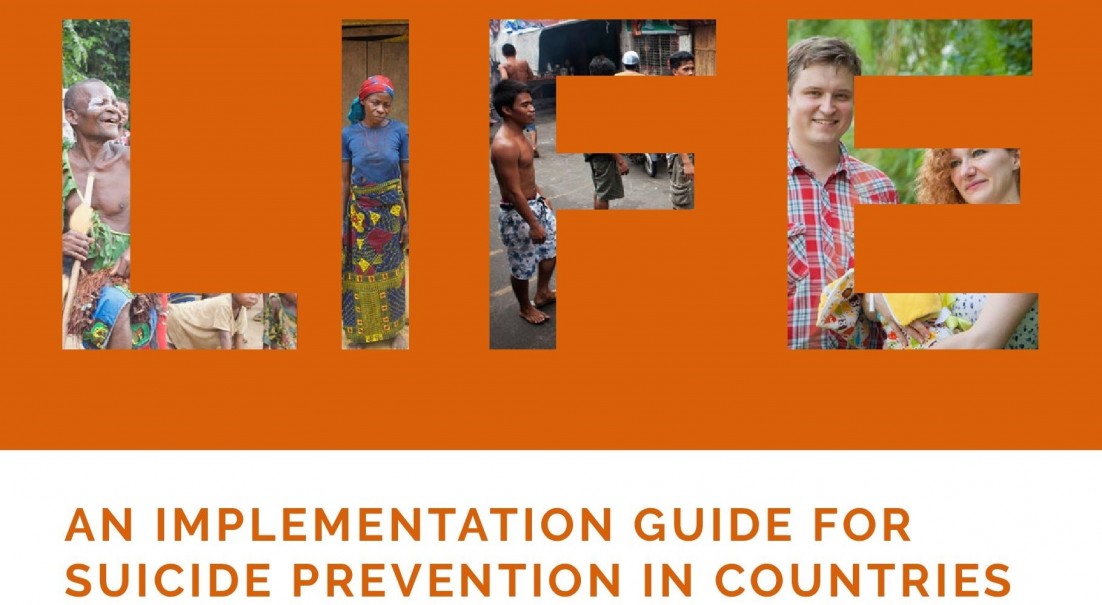
We have now simplified the content. In the new guidelines we have highlighted four central measures that are generally accepted and whose benefit is documented. The guidelines also list examples showing that suicide prevention works – all over the world. We want to address more countries with these new guide- lines and transmit the message that, no matter the situation of a country at present, and regardless of whether or not it has developed a national action plan, it is important to start acting now.
“We want to address more countries with these new guidelines and transmit the message that, no matter the situation of a country at present, and regardless of whether or not it has developed a national action plan, it is important to start acting now.”
2 One of the central interventions is restriction of access to means of suicide. Can you give us a specific example?
Around one fifth of all suicides worldwide are due to self-poisoning with pesticides, and this is a topic that is especially acute in low-income countries. Tens of thousands of suicides could be prevented by banning the most toxic pesticides. In Sri Lanka, for example, this measure resulted in some 93,000 fewer suicides between 1995 and 2015, without negatively affecting agricultural production. Cost-effectiveness analyses of banning pesticides show that such measures have a major impact and, compared with other measures, at a very low cost. In addition to pesticides, firearms are another common cause of suicide. Here too, when fewer weapons are available, fewer suicides occur.
3 Where does suicide prevention work especially well?
The WHO database contains the mortality data from the 194 member states. However, nearly half of all countries do not have a death register that records cause of death. In such cases the WHO uses mathematical models that produce relatively rough figures. We therefore have no way of knowing how well suicide prevention is working in these countries. Among the countries with high-quality data, though, Japan stands out. In this country decades of suicide prevention efforts have helped to lower the figures substantially. Sweden and the United Kingdom have also managed to demonstrably reduce their suicide rates.
4 How does Switzerland compare internationally?
Switzerland has taken a major step forward with its national action plan. For a long time it was felt that the cantons were responsible and that progress could not be made with our federal system. But it turned out that it was possible. In suicide prevention it is important to take a comprehensive approach because this allows several sectors – not just the health sector but civil engineering and education as well – to think things through together.
What matters now is the implementation. And evaluation – something that is often mentioned but rarely actually done. Evaluation is usually viewed as an unpleasant appendage, but it is vital because it closes the circle: projects that are evaluated contribute to the evidence on which the WHO bases its work when it issues new recommendations for suicide prevention. The field can only progress if what works and what doesn’t is put down in writing.
5 What would you like to see going forward?
In addition to a supportive social environment, strength of character – for example in the form of receptiveness, humour, gratitude or empathy – plays a major and primary role. These strengths are not predetermined; they can be trained. This is why mental resilience can also be learned to a certain extent – and promoted through targeted offerings. Individual differences need to be borne in mind. Research has shown, for example, that men find it more difficult than women to ask for support from the people around them after the loss of a partner. They usually suffer far more from loneliness and the associated negative impact on their health. Loneliness is unfortunately a taboo subject in our society. Loneliness must become a public health concern, and all the more so since it is becoming more common in today’s individualistic society and is affecting a growing number of people. This is why effective prevention also takes the societal framework into account, and en- ables people to participate in society through mobility services and leisure activities.
“Loneliness is unfortunately a taboo subject in our society. Loneliness must become a public health concern, and all the more so since it is becoming more common in today’s individualistic society and is affecting a growing number of people.”


